


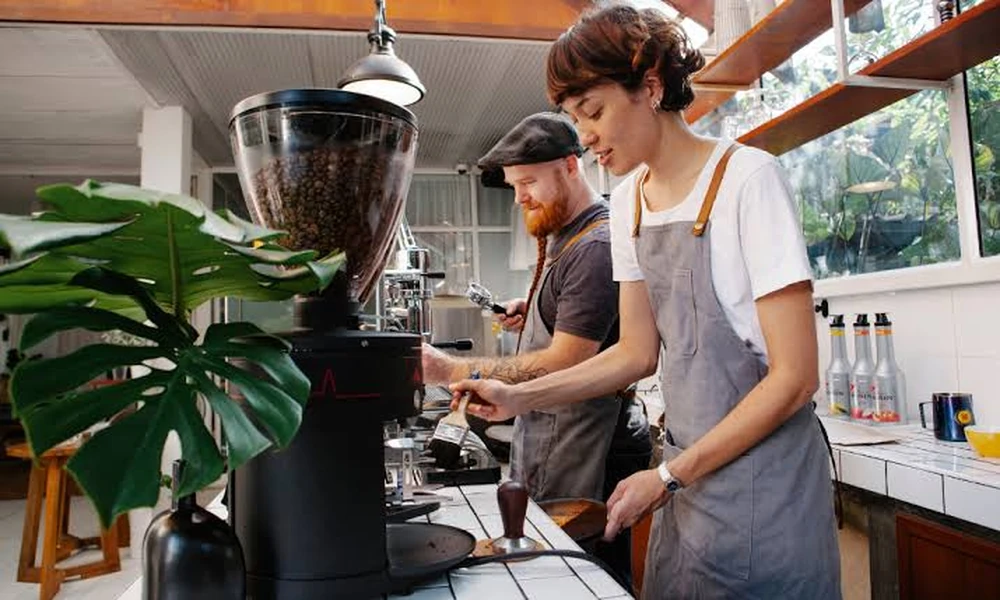
Almost every bag of coffee sold at any kind of premium says one hundred percent arabica somewhere on it, which has turned a botanical fact into a marketing claim and stripped most of the meaning out of it. Arabica coffee beans are not a grade or a quality tier. They are a species, with a particular chemistry that produces a particular kind of cup, and there is plenty of mediocre arabica and some genuinely excellent robusta. Knowing what the distinction actually rests on makes the label useful again.
Two Species, Not Two Grades
Coffea arabica and Coffea canephora, sold as robusta, are different plants. Arabica carries forty-four chromosomes to robusta’s twenty-two and is self-pollinating, which is why its varietals stay distinct. It accounts for roughly six in ten kilograms of the world’s coffee and nearly all of what is sold as specialty. Robusta makes up most of the rest and dominates instant coffee, low-cost blends and the espresso tradition of southern Italy, where it is used deliberately rather than as a compromise.
The Chemistry Behind the Difference
The flavour gap is compositional. Arabica contains roughly double the lipids and appreciably more sucrose than robusta, and sugars and fats are what produce sweetness, body and the aromatic compounds that develop during roasting. Robusta carries higher levels of chlorogenic acids, which contribute the harsher, woody, rubbery notes people associate with cheap coffee, along with more caffeine, which is itself bitter. None of this is a matter of processing or roasting skill. It is the raw material.
Caffeine and How It Is Perceived
Robusta contains around twice the caffeine of arabica by weight, somewhere near two and a half percent against a little over one. The plant produces it as an insecticide, which is a large part of why robusta is hardier. For a drinker, the practical effects are that a robusta-heavy cup is more bitter and carries a stronger stimulant load, and that anyone sensitive to caffeine will generally find arabica easier to drink through an afternoon.
Why Arabica Is Harder to Grow
Arabica wants altitude, roughly a thousand metres and upwards, with cool nights, steady rainfall and a narrow temperature band. It is vulnerable to leaf rust, to the coffee borer beetle and to frost, and it yields less per tree. Robusta tolerates lowland heat, resists disease and produces more. That difference in agronomy, not any judgement about taste, is the main reason arabica costs more and the main reason climate change is discussed more anxiously in arabica-growing regions.
Varietals Within the Species
Arabica is not one flavour. Typica and Bourbon are the historical parents, and from them come Caturra, Catuai, Pacamara, SL28 and the rest, each with its own yield, disease tolerance and cup character. Geisha, grown at altitude in Panama and Ethiopia, is the best known of the high-value varietals and prices accordingly. A bag naming its varietal is telling you something specific; a bag saying only arabica is telling you which species it is and nothing more.
Processing Shapes the Cup as Much as Genetics
The same arabica lot processed differently produces noticeably different coffee. Washed processing strips the fruit before drying and yields clarity and defined acidity. Natural processing dries the cherry whole and pushes heavier, sweeter, fruit-driven flavours. Honey processing leaves some mucilage and lands between them. This is why origin alone is a weak predictor of taste, and why anyone buying single origin coffee beans should read the processing method alongside the country.
Where Robusta Still Earns Its Place
Robusta produces thicker, more persistent crema and a heavier body, which is why traditional Italian espresso blends include ten to thirty percent of it and why it holds up better through milk. Good robusta, grown and processed with care, is a legitimate ingredient rather than a filler. The problem is that most robusta is grown for volume at the lowest possible cost, so the reputation is earned even though the species is not inherently at fault.
In Espresso and in Milk Drinks
Arabica’s acidity and aromatic complexity are most visible in black coffee, where there is nothing to hide behind. In a latte or cappuccino, milk fat mutes acidity and adds sweetness, so the delicate distinctions between origins compress considerably. This is worth knowing before paying a premium for a nuanced single origin destined for an office where nine drinks in ten are milk-based. A well-made blend chosen to cut through milk often serves that setting better.
Reading a Blend Label Honestly
One hundred percent arabica sets a floor, not a standard. It says nothing about grade, altitude, defect count, harvest year or when the beans were roasted, and a stale, defective, poorly roasted arabica will taste worse than a well-made blend containing robusta. Look past the species claim to the roast date, the origin detail and the processing method. Where none of those appear, the arabica claim is the only thing the packaging was willing to commit to.
Choosing With Your Equipment in Mind
Match the bean to the machine and the drinks. A capable grinder and an attentive operator can justify a high-grown washed arabica roasted light. A shared office machine pulling sixty milk drinks a day is better served by a medium-roasted arabica with enough body to survive milk, or a blend built for the purpose. Bought against the equipment and the drinks people actually order, arabica coffee beans are a straightforward improvement rather than an expensive label.
