


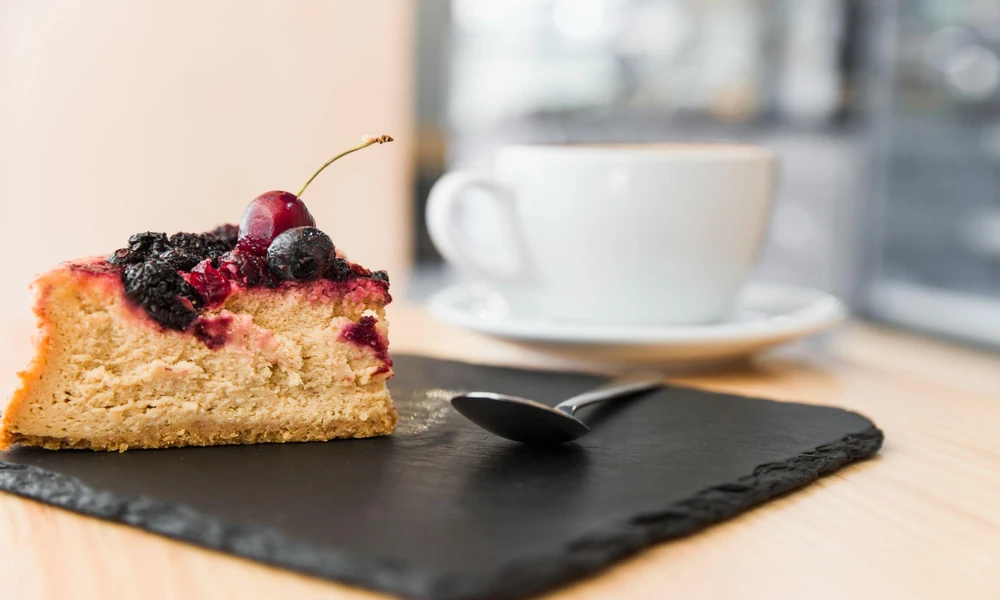
Plant-based baking has improved enormously, and the range now spans genuinely well-made pastries at one end and heavily processed products relying on commercial substitutes at the other. Both are labelled the same way, both sit in the same display case, and the price difference is not always a reliable guide. For anyone eating plant-based for health reasons rather than only ethical ones, the distinction matters, since a product free of animal ingredients can still be built almost entirely from refined fats and stabilisers. Six indicators help identify what you are buying when choosing an eggless vegan tart in Singapore.
1. The Cafe Cannot Tell You What Is In It
The simplest test. Ask what the filling is made from and what fat is used in the pastry, and notice whether staff know or need to check.
A kitchen baking its own pastries can usually answer without hesitation. One reselling a frozen commercial product often cannot, and that distinction tells you more than any label. A vegetarian friendly cafe in Singapore that bakes on site will generally be pleased to describe how something is made, since it is a point of difference they would rather you knew about.
2. The Texture Is Uniformly Smooth and Slightly Rubbery
Fillings built on real ingredients, whether nut-based, fruit-based, or using plant milks and starches, have a texture that varies and sets imperfectly.
A filling that is perfectly uniform, holds a precise shape at room temperature, and has a slight bounce to it generally indicates heavy use of gelling agents and stabilisers. Not harmful, and not what most people picture when buying something described as made with real ingredients.
3. The Flavour Reads as Sweetness Rather Than Ingredient
A good lemon tart tastes like lemon, a chocolate one of chocolate. Where the dominant impression is sweetness with a general flavour behind it, the flavour is likely coming from an added compound rather than the ingredient itself.
This is particularly noticeable in fruit fillings, where real fruit carries acidity and a slightly variable taste that flavouring does not reproduce.
4. The Pastry Is Pale, Soft, and Lacks Any Layering
Vegan pastry made with plant-based fats can be excellent, with proper colour, crispness, and structure.
Pastry that is uniformly pale, soft rather than crisp, and shows no layering or variation usually indicates a shortcut, often a pressed or moulded base rather than a rolled pastry. It holds together reliably and eats like a biscuit base rather than a tart shell.
5. It Keeps Looking Perfect for Longer Than Seems Reasonable
Products made with real ingredients deteriorate. Fruit darkens, fillings weep slightly, pastry softens as it absorbs moisture.
An item that looks identical on day three to how it looked on day one is being held together by something. Ask how long items are kept on display and whether they are baked daily, since the answer is often informative.
6. The Cafe Describes It Only by Category
Where the description is entirely about what the item does not contain, with nothing about what it does, that framing sometimes conceals a thin ingredient story.
A kitchen proud of what it uses tends to mention it: the type of nut, the fruit, the chocolate percentage. One describing a product only as vegan and gluten-free may have little else to say.
Asking Before Buying Rather Than Afterward
None of this requires expertise. Asking what the filling is made from, what fat is in the pastry, and whether it was baked on site answers most of it in thirty seconds.
Cafes doing this properly welcome the question, and the ones that cannot answer have told you something useful without any awkwardness. For anyone eating plant-based for health reasons specifically, that short conversation is worth considerably more than any label on a display card.
Contact Lilac Oak to ask about our ingredients, what we bake on site, and what goes into our plant-based pastries.
