


Key Highlights
- Bento boxes naturally support balanced portions of protein, grains and vegetables.
- Individual boxes make dietary labelling simpler for mixed office teams.
- Larger orders benefit from collecting dietary information ahead of time.
- Overloaded boxes and repetitive menus are common ordering mistakes.
- Rotating proteins and sauces keeps a recurring lunch order more interesting.
How Lunch Choices Impact Team Productivity
Lunch has a bigger effect on the afternoon than most offices give it credit for. A heavy, carb-only meal tends to leave a team sluggish by two o’clock, while something lighter and more balanced keeps energy steadier through the rest of the working day. That’s part of why corporate catering has shifted towards bento-style boxes rather than the usual sandwich platters, since each box can be portioned and varied without much extra effort.
Bento box catering also solves a practical problem: not everyone at the table wants the same thing, and a shared platter rarely accounts for that. Individual boxes let people see exactly what they’re eating, which tends to matter more once you’re feeding a team with different tastes and dietary needs.
Why Bento Boxes Suit Office Lunches
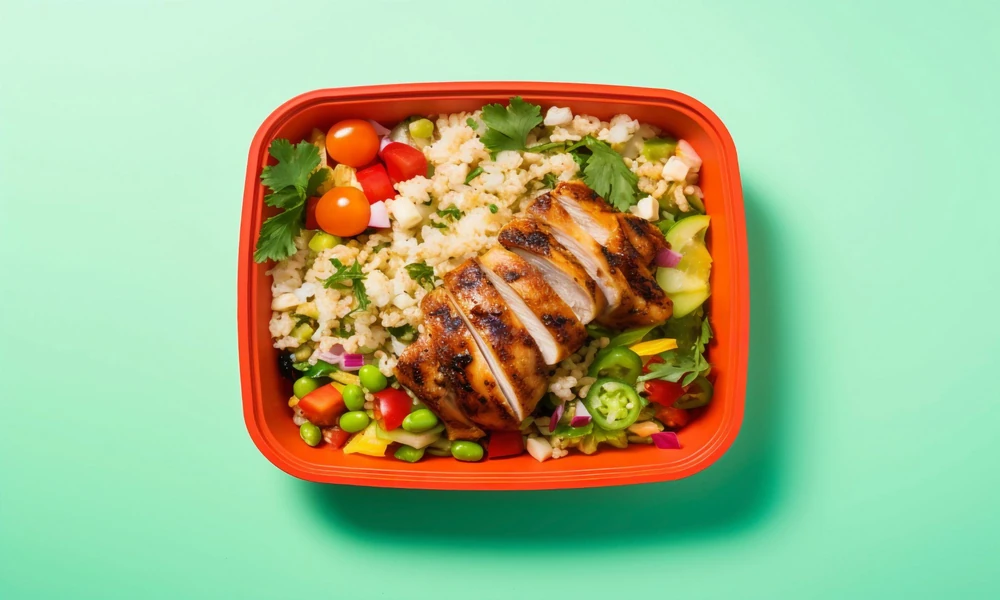
A bento box works well for office settings mainly because of its structure. Each compartment naturally separates protein, carbohydrates and vegetables, which makes it easier to build a genuinely balanced plate rather than defaulting to whatever’s easiest to prepare in bulk. It also travels well, so a meeting running long isn’t a problem the way a plated meal would be.
There’s a practical side too. Boxes are easy to label individually, which matters when a team has a mix of dietary requirements. Nobody has to guess what’s in a shared dish or ask the caterer to repeat themselves at the table, which is part of why bento box catering has become a common choice for weekly office lunches.
What Goes Into a Balanced Box
Most corporate catering menus build a bento box around a similar structure, adjusted depending on appetite and dietary needs:
- A lean protein, such as grilled chicken, tofu or salmon.
- A whole grain base, like brown rice, soba noodles or quinoa.
- At least two vegetable components, ideally one raw and one cooked.
- A small portion of fruit or a lighter dessert.
- A sauce or dressing served separately to keep textures intact.
Getting the balance right usually comes down to portion size as much as ingredient choice, since even healthy components can overload a box if nobody’s watching the proportions closely enough during prep.
Planning Corporate Catering for a Larger Team
Ordering for an office isn’t quite the same as ordering for a family dinner, mostly because of scale. Good corporate catering accounts for this from the start, rather than fixing it on delivery day:
| Team Size | Box Approach | Dietary Considerations | Lead Time |
| Under 10 | Fully customised per person | Easy to accommodate individually | A day or two |
| 10 to 30 | A set menu, two or three options | Allergen labels as standard | Around three days |
| 30 plus | Standardised, clearly labelled | Pre-collected dietary forms | A week or more |
Larger orders benefit from collecting dietary information well in advance, since sorting it out on the day slows everything down.
Common Mistakes When Ordering for the Office
A few recurring issues come up when teams order bento boxes without much planning. Overloading each box with too many components can make the meal feel heavier than intended, even when every ingredient on its own is a reasonably light choice. It’s also easy to forget dietary labels until the last minute, which causes unnecessary back-and-forth on the day of delivery.
Ordering the same menu every time is another common pattern, and it tends to reduce how enthusiastic a team is about lunch over time. Rotating proteins, grains and sauces, even slightly, keeps a recurring bento box catering order from becoming predictable.
Key Takeaways for Office Bento Planning
A well-planned bento box lunch does more for a team than most people expect from a simple change in catering format. It supports steadier energy through the afternoon, accommodates a wider range of dietary needs, and generally feels less repetitive than a standard sandwich order, even across a busy working week.
Getting the details right, like portioning, labelling and variety, is mostly a matter of planning slightly ahead rather than ordering at the last minute, especially once dietary needs are factored in.
Contact Alice Boulangerie to put together a bento box menu suited to your team’s size, schedule and dietary needs.
